
In this article, we’re going to cover everything you need to know on how to clean a brick fireplace. By the end of the steps below, you’ll have a fireplace you can be proud of.
A brick fireplace is a central feature of any room. It stands out as you walk in and helps place everything else together. The last thing you want is for your guests to walk into the room and see a fireplace full of soot and debris. Instead, you want a brick fireplace that always looks its best.
Like most other things in your home, a brick fireplace requires proper care and maintenance to keep it looking as sharp and good as new. This involves regular cleaning to remove the black soot and any other forms of dust and dirt.
Luckily, cleaning a brick fireplace isn’t a difficult job, and you can do it in just a few simple steps. Keep reading to find out the best ways on how to clean fireplace brick and how to keep it looking great all year round.
Materials and supplies you’ll need
Before you start cleaning your brick fireplace, you’ll need to gather the right materials and supplies. Ensure you get these exact items, as the wrong ones could damage your fireplace instead of cleaning it.
- Rubber gloves: These are the best material gloves to protect your hands from the soot and any chemicals you may use
- Dustpan and brush: Have a dustpan and brush ready to remove any debris and ashes inside and surrounding the fireplace
- Plastic sheet: Some excess soot and dirt may appear when cleaning, so place have a plastic sheet to protect your floors and furniture
- Chosen cleaning solution: There are several cleaning solutions you can use on your fireplace, so ensure you have your chosen one ready
- Scrub brush: A scrub brush will scrub away any stubborn soot stains and dirt from the bricks
- Sponges: You can use sponges to apply the cleaning solution and wipe away the grime from the surface
- Bucket: Have a bucket ready for hot water or to mix your cleaning solution into
- Protective eyewear and face mask: For guaranteed safety, these items will protect your eyes and lungs from soot and dust
Step-by-step guide to cleaning a brick fireplace
Once you have all your materials and supplies together, it’s time to start cleaning your fireplace. Follow these simple steps below:
1. Remove any dust, loose soot, and ashes
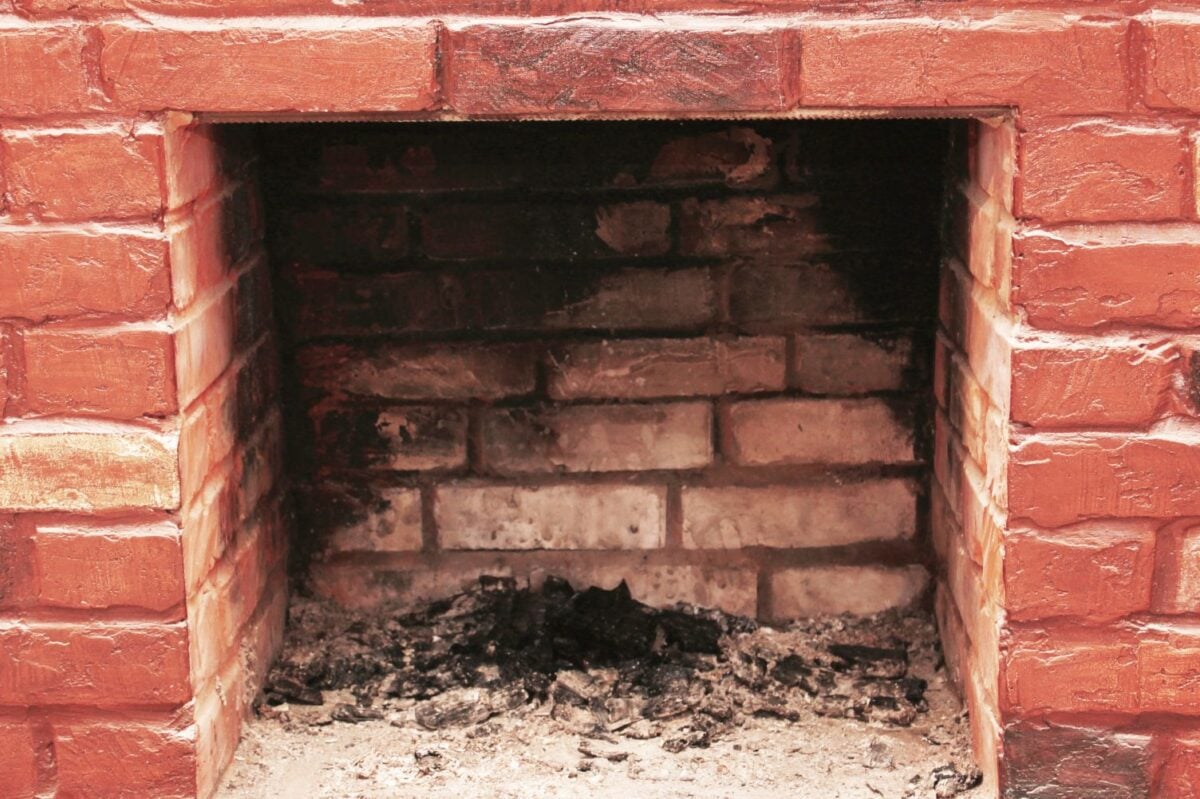
You need to prepare your brick fireplace before you start cleaning it. Make sure it hasn’t been lit for a while so there are no hot coals and it’s completely cold. You should then use your dustpan and brush to remove any excess dust, soot, and ashes.
2. Wipe your bricks with water
It’s now time to prepare your bricks. You want to ensure they are wet with water before you apply any cleaning solution. This is because the bricks will absorb the water as it is wiped on, which prevents your cleaning solution from doing the same, so it stays on the surface instead. The best way to wet your bricks is with one of your sponges or even a spray bottle if you have one handy.
3. Prepare your chosen cleaning solution
There’s no ‘one fits all’ cleaning solution when it comes to cleaning your fireplace, and it is all down to personal preference. However, the best one we have found is Brick Anew’s Brick and Stone Fireplace Cleaner. It is designed to eliminate the toughest residues, including smoke, soot, and creosote.
Other potential cleaning solutions include:
- Dishwashing detergent
- Vinegar
- Scrubbing bubbles
- Trisodium phosphate
- Ammonia
4. Use your scrub brush
Apply your Brick Anew or alternative cleaning solution to your bricks. Brick Anew’s solution comes in an easy-to-use spray bottle, and you can also use an empty spray bottle to transfer your alternative. Work from top to bottom, applying to small areas at a time. Take your scrub brush and then scrub the surface in a circular motion. Keep going until the soot stains start to disappear, and the fireplace brick is clean.
5. Rinse and repeat
You don’t want to rinse all the fireplace bricks at once, so we suggested scrubbing in small sections. Once you’ve scrubbed one area, you can rinse it before you move to the next set of bricks. Use a wet sponge that has been dipped in clean water each time. Repeat this process until complete.
6. Look out for any remaining marks
You’ll now have a good idea of what your clean fireplace looks like. Hopefully, it looks good as new, but there may be a few stubborn marks that don’t seem to budge. If this is the case, you might want to mix a small bit of water with baking soda to make a solution. Apply it to the mark for a few minutes. You should then take a smaller scrub brush to go over the section and then rinse the area.
Frequently asked questions
Still have a couple of questions? We have the answers for you:
What is the best cleaner for a brick fireplace?
The best cleaner to clean fireplace brick, in our opinion, is the Brick Anew Brick and Stone Fireplace Cleaner. It is affordable, convenient, and known to remove even the toughest stains from your brick fireplace. It doesn’t contain any harmful acids, and it will help your fireplace look as good as new.
How do you remove black soot stains from a brick fireplace?
You can remove black soot the same way you remove any other dirt and grime from your brick fireplace. Ensure you follow the six steps listed above, starting by gathering all the correct equipment and supplies. Remember to protect your eyes and lungs by wearing protective gear, and repeat the process if you don’t see any results at first.
How often should I clean my brick fireplace?
There is no set answer to this question, as it will depend on how often you use your fireplace. If you use it regularly, you should try cleaning it every few months. However, if you only use it for special occasions, once a year will be sufficient.



Comments